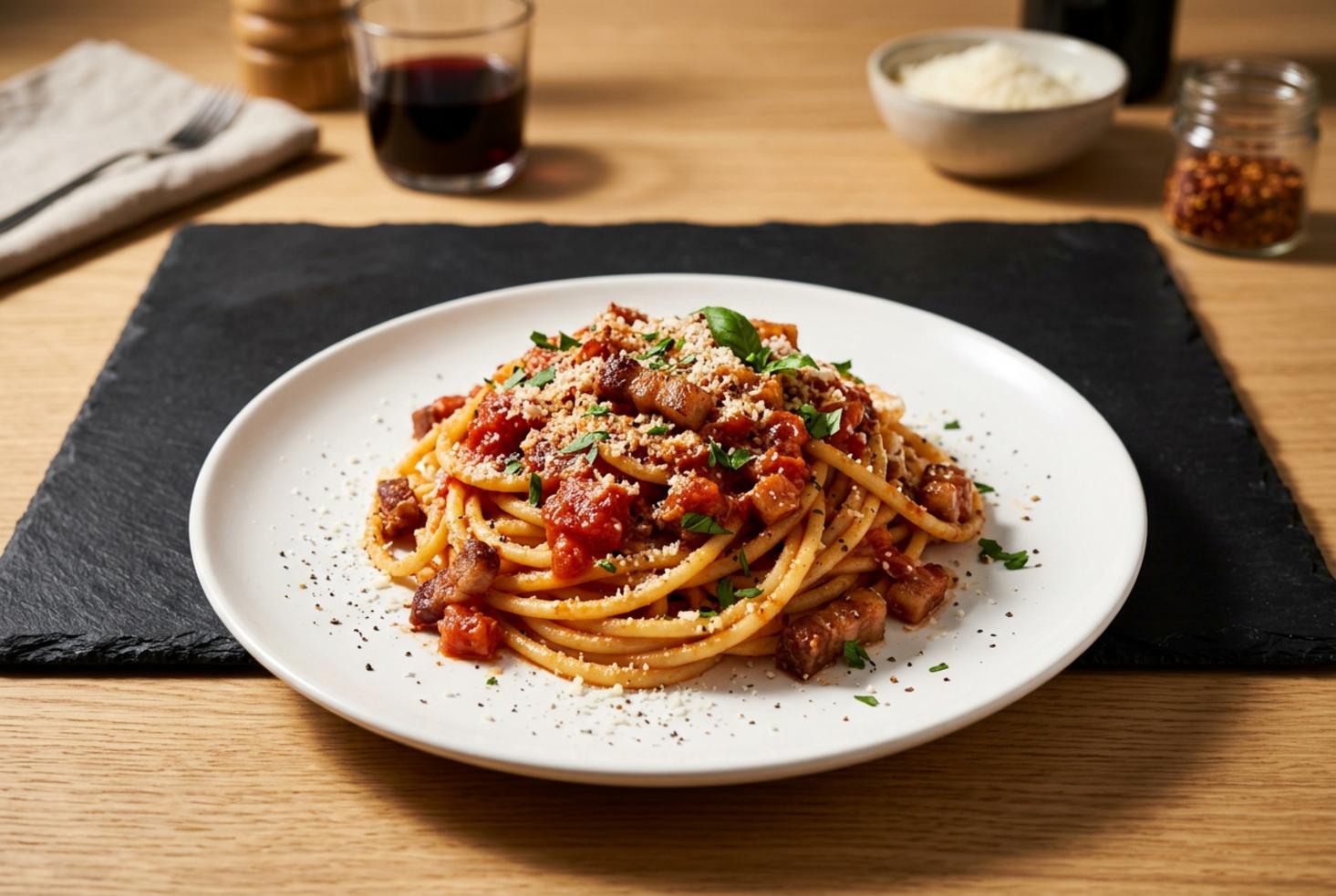
Amatriciana
Classic Roman Amatriciana: Crispy guanciale, tangy tomatoes, and sharp Pecorino Romano cling to bucatini for a spicy, savory bite that's hearty yet simple—pure Lazio tradition in every forkful.
What You'll Need
- 400g bucatini
- 200g guanciale
- 400g peeled plum tomato
- 80g pecorino romano
- pinch to taste chili flake(optional)
- 50ml white wine(optional)
- to taste salt
- to taste black pepper
Let's Get Cooking
- 1
Cut guanciale into strips or cubes and grate Pecorino Romano; bring 5L salted water to a boil in a large pot.
~5mUse rock salt for pasta water to enhance flavor without overpowering sauce.
- 2
In a large skillet over medium-low heat, add guanciale (no oil) and cook until fat renders and edges crisp, stirring occasionally; remove half the guanciale to a plate, keep fat in pan.
~7mLow heat prevents burning for authentic crisp texture.
- 3
Optional: Deglaze with white wine, simmering until evaporated; add crushed tomatoes, chili (if using), pinch of salt, and pepper; simmer gently until reduced.
~15mCrush tomatoes by hand for rustic texture, not pureed passata.
- 4
Cook bucatini in boiling water until just before al dente (follow package, ~8-10 minutes total); reserve 1 cup pasta water.
~10mUndercook slightly as pasta finishes in sauce for perfect absorption.
- 5
Transfer pasta directly to skillet with some pasta water; add reserved guanciale, half the Pecorino off-heat, and toss over low heat 1-2 minutes, adding pasta water to loosen if needed.
~2mOff-heat cheese prevents clumping into balls.
Goes Great With
The Story Behind the Sauce
Pasta Amatriciana is a cornerstone of Roman cuisine, tracing to Amatrice in Lazio where shepherds' gricia met New World tomatoes in the 1700s, transforming into this iconic sauce. Adopted by Rome, it embodies cucina povera—poor man's cooking with luxurious taste—using guanciale (cured pork jowl) for unmatched richness over bacon. The flavor profile balances salty-savory guanciale fat, bright tangy tomatoes, sharp nutty Pecorino Romano, and optional heat from chili, creating a glossy, emulsified sauce that coats pasta perfectly. What makes it special: No garlic or onion in purest forms (regional debates exist), emphasis on rendered fat as base, and finishing pasta in sauce for al dente perfection and starch integration. Its cultural weight endures; simple ingredients yield complexity, ideal for weeknights or impressing with authenticity.