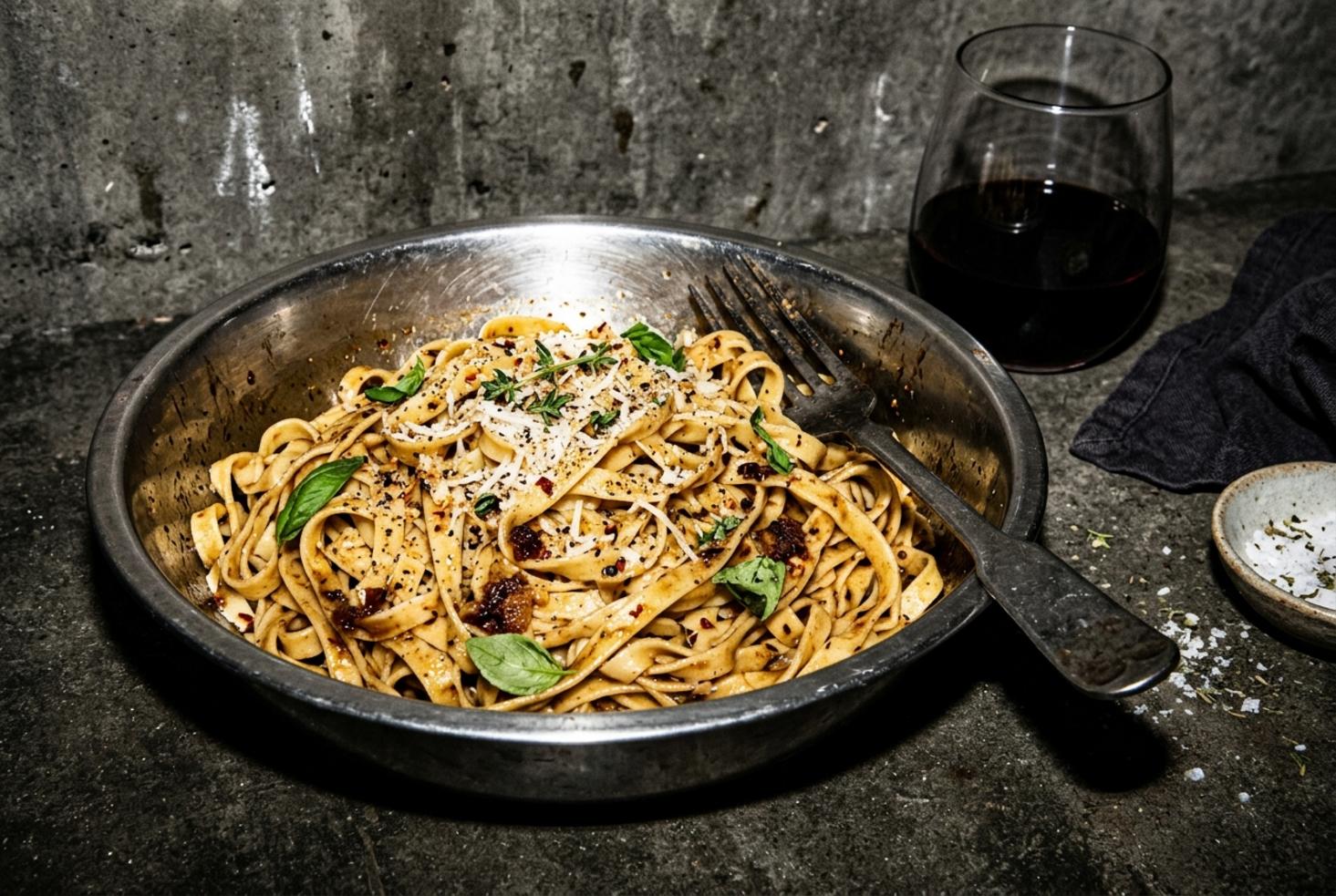
Brown Butter Balsamic Sauce
Brown butter turns nutty and golden while balsamic cuts through with sharp sweetness. This sauce clings to pasta without weighing it down.
What You'll Need
- 1/2 tsp salt
- 1 garlic clove
- 100g butter
- 1 pinch black pepper(optional)
- 2 tbsp pasta water(optional)
- to taste sea salt
- 80ml balsamic vinegar of modena
- 10 sage leaf
Let's Get Cooking
- 1
Put butter in a wide pan over medium heat. Watch it bubble and foam as water cooks off. Tilt the pan to see milk solids turn golden at the bottom.
~4mSwirl often to brown evenly and avoid scorching.
- 2
Add sage leaves and minced garlic. They will sizzle and curl quickly. The sage should become crisp while the garlic softens without turning brown.
~2mPull the pan off the heat as soon as the butter hits a deep amber color.
- 3
Pour in the balsamic vinegar. It will hiss and reduce into a thick, glossy syrup that is ready when it can coat the back of a spoon.
~3mThe butter's richness naturally balances the vinegar's sharp tang.
- 4
Stir in the salt and pepper. Let the sauce sit off the heat for one minute to allow the flavors to settle.
~1mThe final sauce should have a warm, earthy aroma with a vinegary kick.
Goes Great With
Spaghetti
goodThin strands take a light toss. The butter shines through without overwhelming the delicate pasta.
Penne
goodThe tubes scoop the sauce inside, allowing the balsamic sharpness to balance the chew of the pasta.
Pappardelle
greatBroad ribbons hold a glossy coat of sauce. The emulsion clings to the waves of the pasta without sliding off.
Tagliatelle
greatFlat strands pair perfectly with the silkiness of the butter. They twirl up the nutty bits and sage evenly.
The Story Behind the Sauce
This sauce builds on northern Italy's butter tradition, where cooks in Lombardy browned it over wood fires for nutty depth. Emilia-Romagna adds balsamic from Modena, which has been cooked down since Roman times into a thick, sweet-sharp syrup. Together, they make a quick emulsion: butter foams gold, sage leaves crisp, and vinegar bubbles into a glaze. The technique originated in the Middle Ages, when dairy farms around Milan made butter a common staple, often replacing lard in monastery kitchens for a better texture. The flavor is warm and layered. Brown butter smells like roasted nuts and feels silky on pasta, while balsamic cuts in with fruit acidity and no cloying sugar. It is light yet coats strands evenly, pooling just enough at the edge of the plate. This recipe skips cream or stock to focus on the balance of fat, herb, and acid. It is a modern kitchen staple born from the resourceful traditions of northern farms and the historic vinegar attics of Modena.