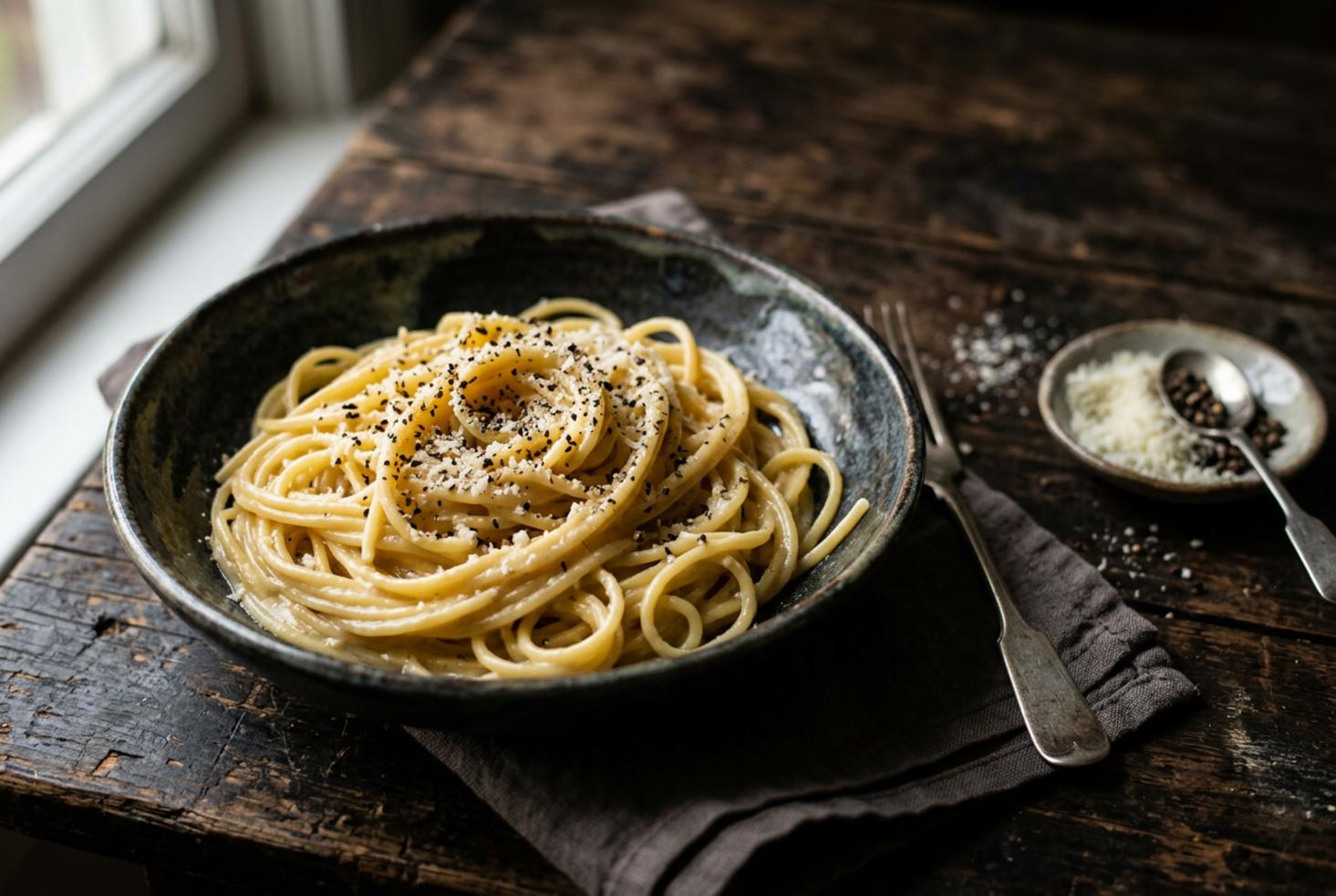
Cacio e pepe
Classic Roman cacio e pepe: spaghetti emulsified in sharp Pecorino Romano, cracked pepper, and starchy pasta water for creamy perfection in under 20 minutes—no cream needed.
What You'll Need
- 250g spaghetti
- 100g pecorino romano
- ½ tbsp (about 8g) black peppercorn
- ⅛ tsp sea salt
Let's Get Cooking
- 1
Bring a shallow pot of water to a boil (do not fill completely, to concentrate starch), lightly salt with sea salt, and cook spaghetti until just under al dente (about 8-9 minutes).
~5mUse less water than usual to make the pasta water starchier for better emulsion.
- 2
Meanwhile, coarsely grind black peppercorns using a mortar and pestle or pepper mill, toast lightly in a dry skillet over medium heat until aromatic (1 minute), and set aside.
~3mFreshly grind for maximum flavor; avoid pre-ground pepper.
- 3
Finely grate pecorino romano. In a bowl, mix half the grated cheese with a small amount (1-2 tbsp) of hot pasta water to form a thick, smooth paste; add more water gradually while whisking to avoid clumps.
~2mUse the smallest grater holes and room-temperature cheese for silky emulsion.
- 4
Reserve ½ cup pasta water, drain spaghetti, and immediately transfer to the skillet with toasted pepper over low heat. Toss to coat, add cheese paste and remaining pasta water as needed, stirring vigorously until creamy sauce forms (1 minute).
~2mWork off heat if sauce breaks; pasta starch is key to binding.
- 5
Divide into bowls, top with remaining grated pecorino and extra pepper. Serve immediately.
~1mDo not reheat; sauce thickens quickly.
Goes Great With
The Story Behind the Sauce
**Cacio e pepe** is a pillar of Roman cuisine from Lazio, Italy, dating to pastoral traditions where shepherds crafted sustenance from durable goods: dried pasta, aged Pecorino Romano, and peppercorns. Its name—"cheese and pepper"—captures the essence, born from necessity yet refined in osterias into a testament of emulsion mastery, where hot pasta water binds cheese into silk without dairy additions. The **flavor profile** balances sharp, salty Pecorino's nutty tang against pepper's bold, floral heat, yielding creamy yet light sauce that clings to pasta. Freshly ground pepper provides aroma and bite, while starch creates body—challenging yet rewarding, as clumping reveals imperfect technique. What makes it **special** is purity: three ingredients demand premium quality and skill, distinguishing pros from amateurs. A Roman icon, it influences global menus but shines in its humility, proving simplicity triumphs.